
Loading...
Serving Apache Junction, AZ and surrounding areas. (480) 919-9947
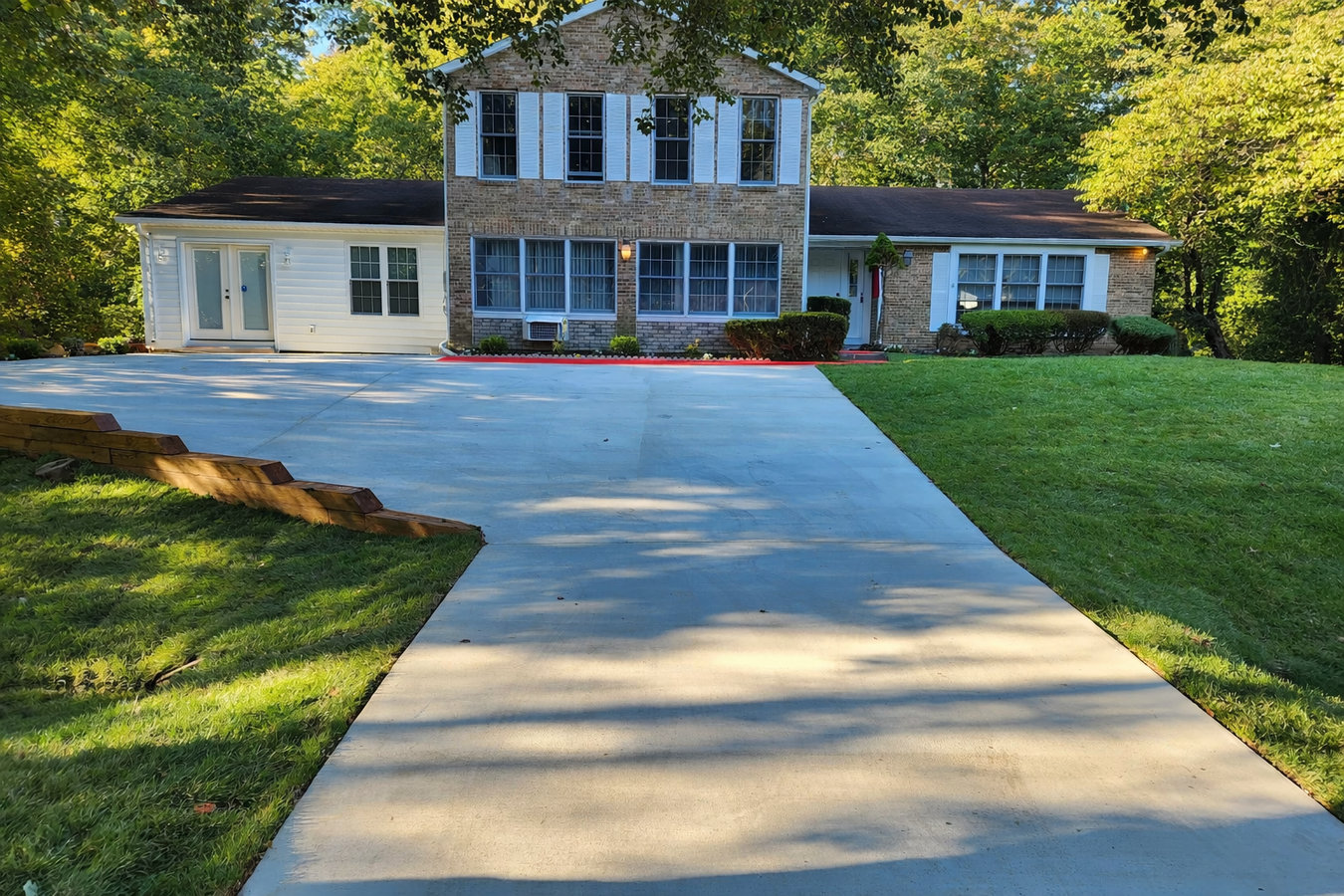
Apache Junction Concrete serves Chandler, AZ homeowners and commercial properties with driveways, patios, retaining walls, and foundations. We handle permits with City of Chandler Development Services, navigate HOA design reviews, and schedule pours to match the desert climate. Free estimates with 1-business-day response.
Chandler driveways built in the 1990s and early 2000s are hitting the age where the original flatwork is cracking, settling, and pooling water - especially where caliche soil underneath has prevented proper drainage. We design replacement driveways with the base depth and reinforcement that local soil conditions actually require. See our concrete driveway building service.
Chandler homeowners with large rear lots use their outdoor space heavily, but a patio poured on the desert floor without a compacted base shifts through the monsoon wet-dry cycle and starts to tip and crack. A correctly built patio drains away from the house and stays level through the seasonal movement that desert soils produce every year.
Chandler HOA communities and higher-end neighborhoods in Ocotillo and south Chandler expect more than plain gray flatwork. Stamped patterns, colored concrete, and exposed aggregate give you the strength of a poured slab with a finish that passes HOA review and matches the character of the surrounding homes.
Grade changes on Chandler lots - especially near drainage channels and the edges of master-planned communities - push soil toward patios and foundations after every monsoon. A concrete retaining wall holds that movement and protects your yard, outlasting timber or block alternatives in the desert heat.
With summer temperatures regularly above 110 degrees, barefoot comfort around Chandler pools requires a slip-resistant, heat-reflective finish - not a standard gray surface that absorbs heat and becomes painful to walk on by midday. We use finishes designed for the desert sun and specify thickness to handle the chemical exposure from pool water.
Any structure in Chandler that sits on the ground - pergolas, outdoor kitchens, additions, fences, and gates - needs footings designed for the caliche layer just below the surface. We assess the soil depth on your property before specifying footing dimensions, so your structure stays plumb and stable through years of desert temperature swings.
Most of Chandler was built during two waves of growth - the late 1980s through the 1990s, and then again in the early 2000s. That means a large share of the city's driveways, patios, and walkways are now 20 to 35 years old. The original flatwork was often poured to minimum thickness on a base that was not deep enough to handle desert drainage conditions. Caliche - the hard calcium-rich layer just below the surface in much of Chandler - blocks water from draining downward, so it pools against slabs and slowly undermines the base. This is the reason so many Chandler driveways develop that familiar pattern of cracks along control joints and corners first, then start to settle and tip.
The climate compounds the problem. Chandler regularly sees temperatures above 110 degrees from June through August, and monsoon storms can drop more than an inch of rain in an hour from July through September. Concrete poured at midday in that heat dries too fast on the surface before it has fully cured underneath, which produces a weak top layer that spalls and cracks within a few summers. Monsoon flooding that cannot drain through the caliche layer pushes water toward foundations and under patios. A contractor who understands these two pressure points - caliche drainage and summer heat scheduling - delivers a result that holds up. One who ignores them delivers a repair call within three years.
Our crew works throughout Chandler regularly, and we understand the local conditions that affect concrete work here. Chandler covers about 65 square miles, and the housing stock varies considerably depending on which part of the city you are in. Homes near Downtown Chandler and the historic San Marcos Hotel area tend to be older, often built in the 1970s and 1980s, with original driveways and flatwork that have long since passed their useful life. South Chandler - particularly the Ocotillo area with its lake communities - has newer homes built in the 2000s and 2010s where the concrete is newer but HOA standards are stricter.
Intel's Ocotillo campus is visible from much of the south side of the city, and the corridor running south on Price Road and Arizona Avenue is where a lot of the city's professional workforce lives. These neighborhoods expect quality finishes and have HOA review boards that look closely at exterior materials and colors before approving any work. We know what Chandler HOA boards typically ask for and prepare documentation to make that process straightforward. The City of Chandler Development Services division processes building permits for concrete work, and we are familiar with what those applications require and how long review typically takes.
We also serve homeowners across the border in Gilbert, where similar master-planned communities and HOA standards apply, and in Mesa, where an older housing stock creates consistent demand for driveway and patio replacement.
Contact us by phone or the online form and describe the project scope and location. We respond within 1 business day and schedule a free on-site visit at your convenience - no commitment required.
We visit the site, measure the work area, check soil and drainage conditions, and discuss finish options. You receive a written quote that breaks down every line item - there are no surprise charges added after work begins.
We handle the permit application with City of Chandler Development Services on your behalf. If your neighborhood has an HOA, we assemble the materials for design review so written approval is secured before any scheduling.
The crew excavates, sets the compacted gravel base, installs forming, and schedules the pour for early morning during warm months. After curing we walk the finished job with you to confirm everything meets the agreed scope.
We serve all Chandler neighborhoods - from Downtown to Ocotillo and Fulton Ranch. Free written estimates, no pressure, 1-business-day response.
(480) 919-9947Chandler is one of Arizona's largest cities, home to roughly 280,000 residents spread across 65 square miles of the East Valley. The city grew from a small farming community into a major tech hub - Intel's largest chip-manufacturing campus in the United States sits in south Chandler, and major employers like Wells Fargo, PayPal, and Microchip Technology have significant operations here. The result is a stable, professional population with strong homeownership rates and homes that reflect that investment. Downtown Chandler, anchored by the historic San Marcos Hotel, retains the character of the original city, while the Chandler Fashion Center and surrounding retail districts serve as the commercial heart of the modern East Valley.
The housing stock spans two distinct eras. Neighborhoods built from the late 1980s through the 1990s - communities like Sun Groves and older sections along the Price Road and Arizona Avenue corridors - are now in the 25-to-35-year range and facing the first round of major maintenance on driveways, patios, and flatwork. Newer master-planned communities in south Chandler, particularly the lake communities in Ocotillo, were built in the 2000s with larger homes and more stringent HOA rules on exterior finishes. Contractors serving Chandler need to understand both worlds. Homeowners in adjacent Tempe deal with a similar range, though with a denser, more urban housing stock that skews older, while Queen Creek to the southeast is still in an active growth phase where new construction concrete work is the dominant project type.
Precision-poured interior floors for residential and commercial spaces.
Learn MoreHeavy-duty parking lots designed for high-traffic commercial use.
Learn MoreChandler driveways, patios, retaining walls, and foundations - call now or submit online and we will respond within 1 business day.