Loading...
Serving Apache Junction, AZ and surrounding areas. (480) 919-9947
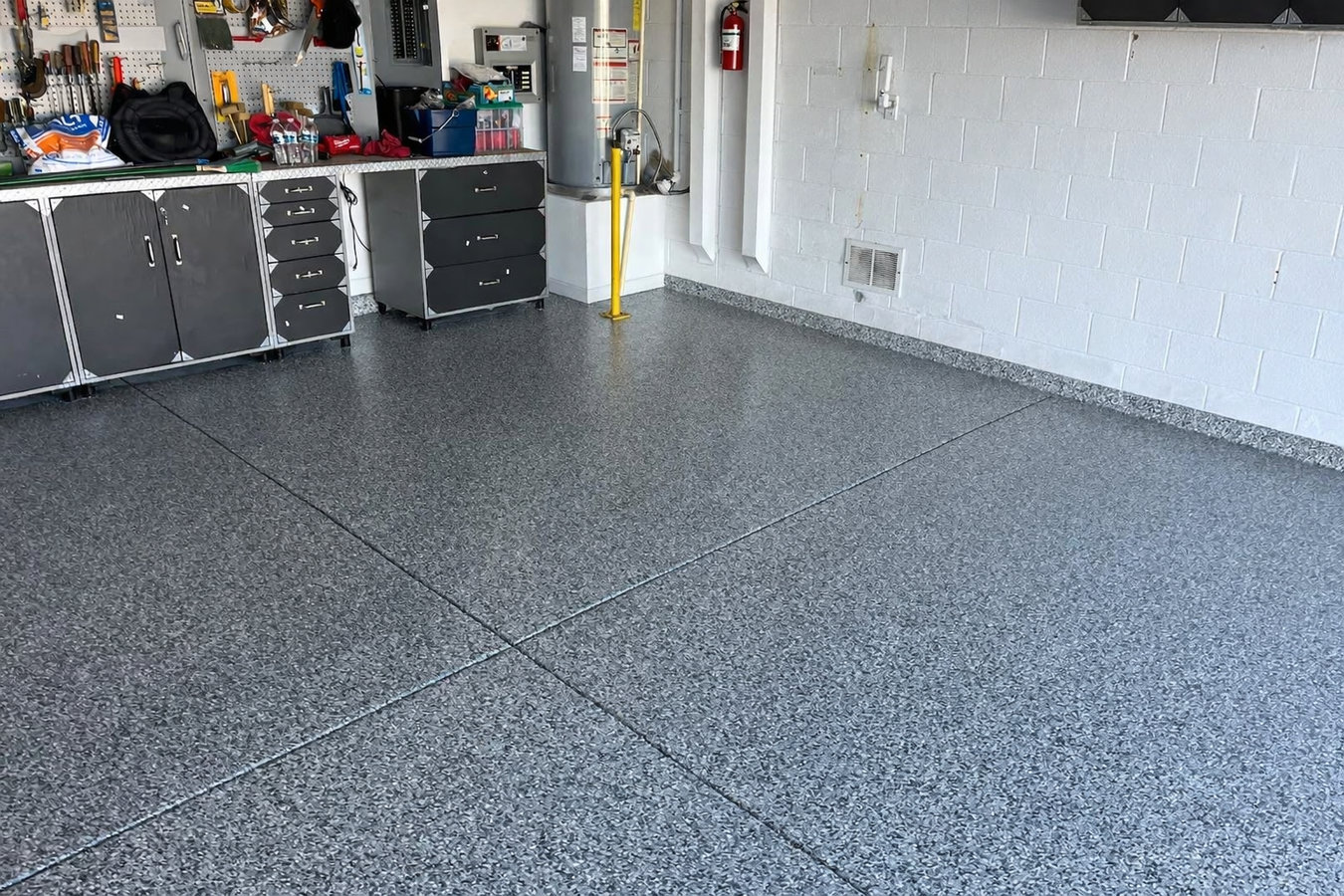
Your old garage floor is cracked, flaking, or soft in spots. We pour a solid new slab with the right base prep for Apache Junction soil so it holds up for years, not months.
Garage floor concrete in Apache Junction involves removing the old slab if needed, grading and compacting the soil, and pouring fresh concrete in one continuous session. Most jobs for a standard two-car garage take one day to pour and five to seven days before you can drive on the new floor.
A lot of Apache Junction homes were built in the 1970s and 1980s, and original slabs from that era are reaching the end of their life. If your floor has cracks, low spots, or feels hollow underfoot, it is worth getting eyes on it before it gets worse. Beyond the garage, we also handle concrete floor installation for other areas of your home, so one call can cover multiple projects.
The biggest thing that separates a garage floor that lasts from one that fails in a few years is what happens before the concrete is ever poured. Base preparation - compacting the soil and adding a gravel layer where needed - is the step most shortcuts skip. In Apache Junction, with its caliche and expansive desert soils, that step is not optional.
Small hairline cracks are common and often harmless. But cracks wider than a quarter-inch, cracks that have grown since you last looked, or cracks running all the way across the floor are signs the slab is in trouble. In Apache Junction, this kind of cracking is often caused by desert soil shifting - especially after a wet monsoon season followed by a dry stretch. Waiting lets the problem deepen.
If the top layer of your concrete is peeling off in thin chips, leaving a powdery residue when you sweep, or showing small pits across the surface, the slab has lost its surface strength. This is especially common on older Apache Junction slabs poured without proper curing in desert heat. Once the surface starts breaking down, it accelerates - patching will not fix a floor that has failed from the top down.
A properly poured garage floor slopes slightly toward the door so water drains out. If you see puddles forming in the middle of the floor or along the walls after monsoon rains, the floor has settled unevenly. Standing water is a nuisance and can eventually work its way under the slab, making the underlying problem worse over time.
Walk slowly across your garage floor and listen. If spots sound hollow when you step on them - almost like tapping an empty box - the concrete has separated from the ground beneath it. This means the base layer has shifted or eroded, leaving the slab unsupported. In Apache Junction, caliche layer shifts or monsoon water finding its way under the slab are common causes.
We handle garage floor projects from start to finish - demolition of the old slab, soil grading and compaction, gravel base work, the pour, finishing, and control joint cutting. Standard broom-finish concrete gives you a functional, grippy surface at the most straightforward price point. If you want something more polished, we can finish the slab smooth or discuss coating options after the concrete cures. For homeowners who want to upgrade the look beyond plain gray, our decorative concrete work can be applied to a new garage slab just as easily as to an outdoor surface.
We also work on adjacent concrete throughout your property. If you are replacing the garage floor and also need new interior flooring, our concrete floor installation service covers utility rooms, workshops, and other interior spaces. Combining work in one visit saves you time and often reduces the total cost.
Suits homeowners with a failed or missing garage floor who need a complete, long-term replacement starting from the ground up.
Suits homeowners parking heavy trucks or storing large equipment who need extra load capacity along the perimeter.
Suits homeowners who want a clean, functional floor with natural grip and the lowest overall project cost.
Suits homeowners who plan to add an epoxy coating or sealer later, where a flat, consistent surface is required.
Apache Junction regularly sees summer temperatures above 110 degrees, and concrete poured in that kind of heat can dry too fast on the surface before it has properly hardened underneath. That leads to cracking, surface dusting, and weak spots that show up within a year or two. Experienced local contractors schedule pours for the coolest part of the day - often before sunrise in summer - and may use chilled water in the mix to slow things down. The desert also brings haboobs during monsoon season (July through September), which can contaminate a fresh surface. We watch the forecast and build flexibility into our schedule during storm season.
We work on homes all across the Apache Junction area, including in Gold Canyon where desert terrain and sandy soils make base preparation especially important, and in Queen Creek where newer subdivisions sometimes need demolition of builder-grade slabs that did not hold up. Whether your home is a 1980s ranch near the Superstition Mountains or a newer build closer to the US-60 corridor, we know what the ground and the climate here demand.
For guidance on hot-weather concrete practices, the American Concrete Institute publishes widely used standards on mix adjustments and curing methods for high-temperature conditions.
Call or message us and we will schedule a time to see your garage in person - most jobs cannot be quoted accurately over the phone. We will measure the floor, check the condition of any existing slab, and give you a written, itemized quote. You will hear back within one business day.
Before the crew arrives, move everything out of the garage - cars, shelving, storage, all of it. Plan to park elsewhere for at least a week. We will confirm the schedule in advance and tell you exactly what to prepare, including whether any permit is needed for your specific job.
If there is an existing slab, we break it up and haul it away. Then we grade and compact the soil and add a gravel base layer where needed - this is the step that determines whether your floor is still solid in ten years. The pour itself typically takes two to four hours for a standard two-car garage.
Once poured, the slab needs time to cure properly. In Apache Junction's dry climate, we keep moisture in the concrete during the first few days so it reaches full strength. We will walk the finished floor with you before we leave - confirming the surface is level, draining correctly, and ready for your timeline.
No high-pressure sales. Just a straight answer and a written quote.
(480) 919-9947We plan summer pours for early morning - often before sunrise - and adjust the mix to slow down drying in extreme heat. This is not something every contractor does, and it is the single biggest factor in whether a slab poured in June is still solid two summers later.
The soil under your garage is what determines whether your floor cracks in year two or year twenty. We assess the base, compact the ground, and add gravel where needed before a single truck pulls up. Skipping this step is the most common way a low-bid contractor saves money - and the most common reason homeowners call us to redo someone else's work.
You will get a written estimate that breaks down exactly what is included - demo, base prep, pour thickness, finishing method, and cleanup. There are no line items that appear on the final invoice that were not in the original quote. One of the most common complaints about concrete work is surprise charges, and we work hard to make that impossible.
We work regularly throughout Apache Junction and the surrounding East Valley communities. We know the permit requirements at the Apache Junction Community Development Department, we know what the soil looks like in different parts of the city, and we are not a Valley crew that drove out here for a one-off job. For ROC licensing verification, the{' '}<a href='https://roc.az.gov' target='_blank' rel='noopener noreferrer' className='underline hover:text-foreground transition-colors'>Arizona Registrar of Contractors</a>{' '}is where you can check any contractor in minutes.
Garage floor work in Apache Junction rewards contractors who know the local soil, the desert climate, and the permit process. Every job we do here is designed to last through the heat, the monsoons, and the seasonal ground movement that makes this area harder on concrete than most places in the country.
Add color, texture, or stamped patterns to your new garage slab or any other concrete surface on your property.
Learn MoreInterior concrete floor pours for utility rooms, workshops, and other spaces beyond the garage.
Learn MoreFall and winter slots fill fast - lock in your project before the busy season starts and before summer heat makes scheduling more complicated.