Loading...
Serving Apache Junction, AZ and surrounding areas. (480) 919-9947
Apache Junction Concrete builds slab foundations, driveways, patios, and sidewalks throughout Maricopa, AZ. We know the caliche soil conditions, Pinal County building requirements, and HOA exterior standards that shape concrete projects in communities like Rancho El Dorado, Glennwilde, and Province. We respond within 1 business day.
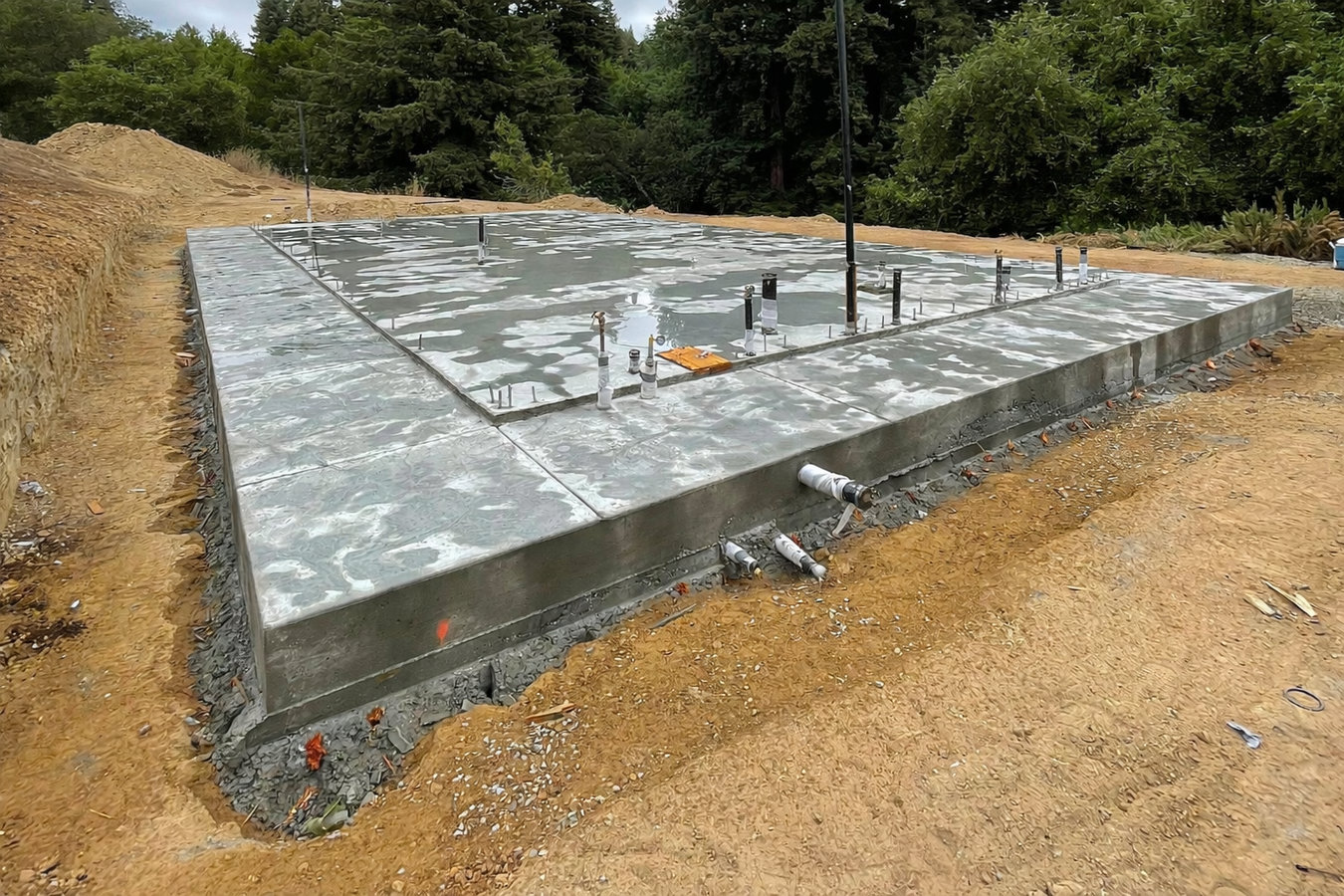
Maricopa's housing stock was built almost entirely after 2000 on concrete slab foundations over caliche and clay soil. When a slab settles, cracks, or fails to drain properly after monsoon rain, the fix requires understanding what is actually happening below the surface - not just patching the visible crack. See our slab foundation building work.
Driveways in Rancho El Dorado, Glennwilde, and other communities built between 2003 and 2008 are now 15 to 20 years old - the age when original concrete in desert conditions starts showing serious cracking at control joints and near the garage apron. Replacing them now prevents more costly repairs to the apron and surrounding flatwork later.
Maricopa backyards are built for desert outdoor living, and a patio that drains toward the house rather than away from it creates real risk during the monsoon season. We assess grading and drainage before every pour and size the slab for the specific lot dimensions common in this area's master-planned communities.
Some properties in Maricopa have grade changes at the rear of the lot where natural desert terrain meets developed land, and caliche soil does not hold back with timber or block solutions that work in cooler climates. Concrete retaining walls resist the cracking and spalling that repeated wet-dry cycles cause in other materials.
Entry steps on Maricopa homes with stucco exteriors and tile roofs are typically part of the original builder package, and they show wear at the nosing and riser faces earlier than the driveway does because of constant foot traffic combined with UV exposure. Replacing or resurfacing steps restores the entry appearance and eliminates trip hazards.
Private sidewalks in Maricopa subdivisions link front entries, side gates, and backyard areas across lots that often have uneven desert terrain underneath. The caliche layer just below the surface in many parts of the city means proper excavation is required before placing base material - a step that is sometimes skipped on lower-bid work.
Almost all of Maricopa was built between 2003 and 2015, which means the city has one of the youngest housing stocks in Arizona. But young does not mean maintenance-free. Homes in Maricopa sit on caliche-heavy soil - a hard calcium carbonate layer found just below the surface throughout Pinal County - that blocks water drainage and creates pressure under slabs when the ground becomes saturated during monsoon rains. Original concrete flatwork from the early 2000s is now well into its first repair cycle, and the surface failures that look minor from the street often reflect base movement underneath.
The climate compounds every concrete problem. Maricopa regularly sees summer highs above 110 degrees, and the combination of intense UV radiation and flash heat causes concrete poured at the wrong time of day to cure too fast on the surface - leaving a weak top layer that flakes and cracks within a season or two. The monsoon season, which runs from roughly mid-June through September, dumps intense rain on flat desert lots that do not drain quickly. Homes in large HOA communities like Province and Glennwilde also have exterior modification requirements that affect material and color choices on every concrete project. Getting these details right from the start prevents expensive callbacks and HOA disputes.
Our crew works in Maricopa regularly and pulls permits through the City of Maricopa Community Development department. The city is about 35 miles south of the Phoenix metro on State Route 347 - John Wayne Parkway - and the distance means homeowners here need contractors who actually make the drive rather than treating Maricopa as an afterthought service call. We do not charge a trip fee and we schedule jobs here the same way we do throughout the rest of the East Valley.
Most of the concrete work we do in Maricopa is in the large master-planned subdivisions that make up most of the city - Rancho El Dorado, Glennwilde, Smith Farms, and Province. The neighborhoods near Copper Sky Regional Park and along White and Parker Roads are among the areas where we see the most driveway and patio replacement demand, because that is where the first wave of 2003 to 2008 homes is concentrated. We know how to prepare a written estimate that includes what your HOA will ask for before the job is approved.
We also regularly serve Casa Grande, just 20 miles south on I-10, and San Tan Valley, which is northeast of Maricopa and shares many of the same soil conditions and homebuilder construction types.
Describe your project and your Maricopa address when you reach out. We respond within 1 business day and schedule a free on-site visit - no deposit required and no obligation to proceed.
We visit the property, check the soil conditions and drainage, measure the work area, and review finish options with you. You receive a written itemized quote before any work is scheduled - if your HOA requires prior approval, we walk you through that process at this visit.
We submit the permit application to the City of Maricopa Community Development department and prepare any documentation your HOA needs for exterior modification approval. We do not schedule work until both are cleared.
Summer jobs are poured before 7 a.m. to avoid the heat that causes surface cracking. After the concrete has cured, we walk the finished job with you and confirm every detail matches the agreed scope before we close the job out.
We serve all of Maricopa - Rancho El Dorado, Glennwilde, Province, Smith Farms, and every neighborhood in between. Free written estimates. No trip fee. 1-business-day response.
(480) 919-9947Maricopa is one of the most remarkable growth stories in Arizona. The city had fewer than 1,500 residents in 2000 and grew to more than 70,000 in roughly two decades - one of the fastest population gains of any city in the country during that period. That growth happened almost entirely through the development of large master-planned communities on desert land south of the Phoenix metro. Neighborhoods like Rancho El Dorado, Glennwilde, and Province were built by national homebuilders and share a consistent look: stucco exteriors, tile roofs, desert landscaping, and concrete slab foundations on caliche-bearing Pinal County soil. Copper Sky Regional Park serves as the city's main community hub, and State Route 347 - John Wayne Parkway - is the main artery connecting Maricopa to the rest of the metro. For information on permits or city services, the City of Maricopa handles most residential building activity through its Community Development department.
Maricopa sits in Pinal County, which sets it apart from most of the East Valley. Building permits and inspections for certain project types follow Pinal County requirements rather than Maricopa city requirements, and the permitting office for unincorporated work is different from the city counter. Homeowners in communities along the southern edge of the city - near the Ak-Chin Indian Community boundary - sometimes deal with additional review steps for projects near community borders. We also work in Queen Creek, another fast-growing Pinal County community northeast of the metro with similar soil conditions and homebuilder construction types.
Precision-poured interior floors for residential and commercial spaces.
Learn MoreHeavy-duty parking lots designed for high-traffic commercial use.
Learn MoreFrom slab foundations to driveway replacement, we handle the full scope of concrete work throughout Maricopa. Free written estimate, 1-business-day response, no trip fee.