
Loading...
Serving Apache Junction, AZ and surrounding areas. (480) 919-9947
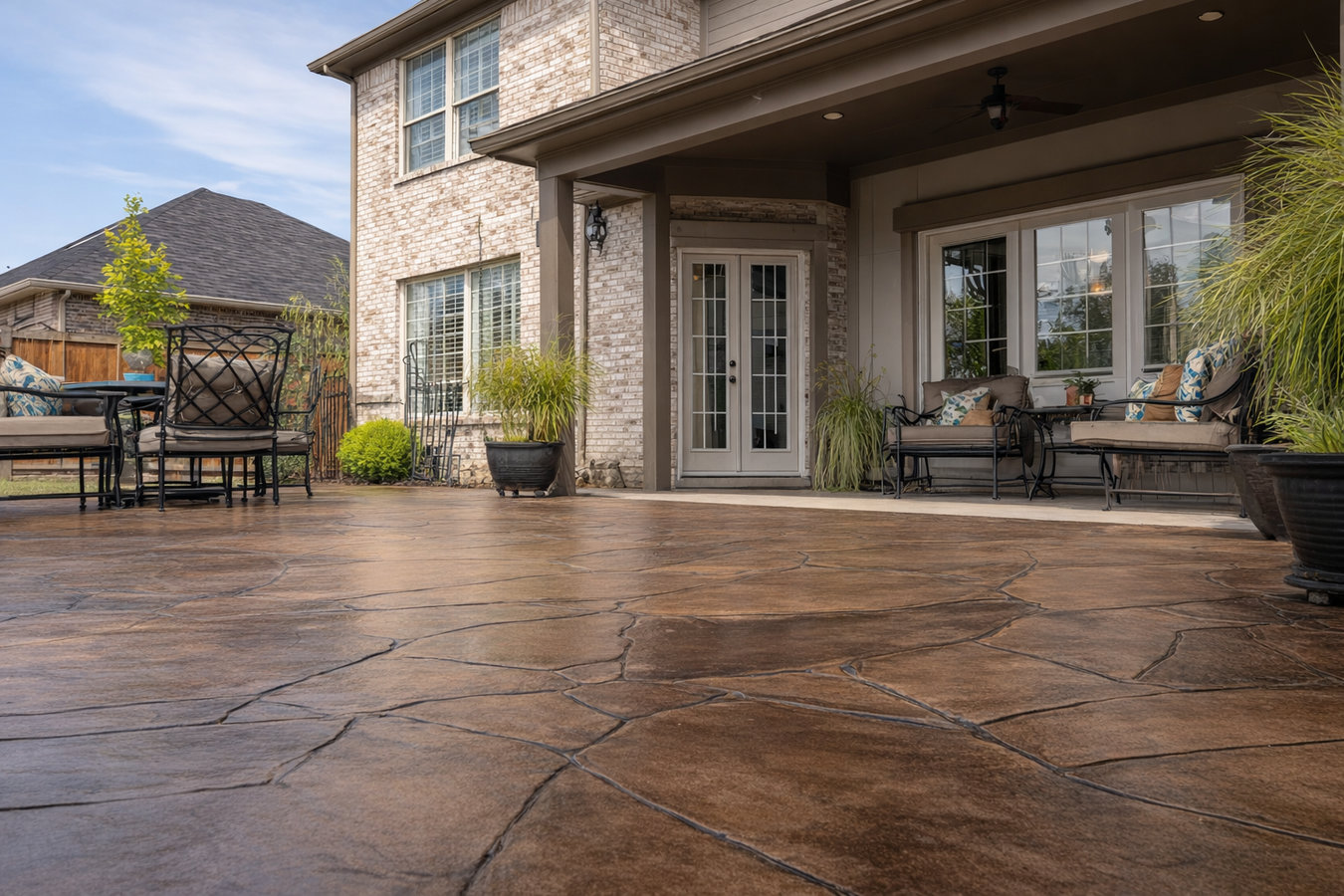
Apache Junction Concrete works throughout Tempe, AZ on decorative concrete, driveways, patios, and pool decks. We bring experience with Tempe's older ranch-home housing stock, concrete block construction, and the flat-lot drainage conditions that affect concrete performance here. Free estimates and 1-business-day response.
Tempe homeowners renovating older ranch-style homes often want to move beyond plain gray slabs - especially on driveways, patios, and pool decks that face the street or get heavy use. Stamped patterns, exposed aggregate, and colored concrete update the look of a 1970s property without the cost and complexity of tile or pavers. See our decorative concrete service.
A lot of Tempe driveways were poured in the 1960s and 1970s on minimal bases with no reinforcement, and they show it - cracked, settled sections that collect monsoon water and look worn. Replacement with a properly reinforced, correctly pitched driveway makes a visible difference in the look and function of older Tempe properties.
Tempe's small lots and strong rental market mean patios take heavy use, but most patio slabs on older properties were poured directly on grade with no base preparation. A replacement patio with a compacted gravel base, control joints in the right places, and a finish suited to the desert sun holds up through years of heat and monsoon cycles.
Pools are common across Tempe, and the deck surface matters more here than in most markets because summer temperatures regularly push past 110 degrees. A plain gray concrete pool deck absorbs heat and becomes painful to walk on barefoot. Slip-resistant, heat-reflective finishes - broom texture, exposed aggregate, or a cool-deck coating - address both safety and comfort in the Tempe summer.
Tempe's dense urban grid and high pedestrian traffic near Arizona State University and along commercial corridors mean sidewalks see real wear. Cracked, uneven sidewalk sections are a liability issue for property owners and a tripping hazard for tenants and guests. We replace damaged sections to code and match the finish of the surrounding walk.
Older Tempe homes built with concrete block walls sometimes have original interior slabs that have cracked or settled unevenly over decades. A new polished or sealed concrete floor on an existing or replacement slab is a practical, durable option for living areas, garages, and commercial interiors, and holds up better in the desert climate than wood-based flooring.
Tempe has one of the oldest housing stocks in the Phoenix metro area. A large share of the city's single-family homes were built between the 1950s and the 1980s using concrete block construction - a building method common across the Valley during that era. That means foundations, exterior walls, and many interior slabs are now 40 to 70 years old. Concrete that old was typically poured thinner and with less reinforcement than current standards require, and it has been through decades of summer heat, monsoon rain, and the freeze-thaw cycle that hits a handful of times each winter. Cracks, spalling surfaces, and settled sections are the natural result.
Tempe's flat topography and compact lot sizes create a different drainage challenge than you find in hillside communities. With nowhere for water to go after a heavy monsoon, it pools on flat surfaces and seeps under slabs, slowly eroding the base. The same heat that drives Tempe's summer climate - regularly above 110 degrees from June through August - causes concrete poured at the wrong time of day to cure unevenly, producing a weakened surface that shows the damage within a few seasons. A contractor who has worked on Tempe properties regularly knows to plan for both of these factors before a single cubic yard is poured.
Our crew works throughout Tempe regularly, and we understand the local conditions that affect concrete work here. Tempe covers just 40 square miles but packs in a wide variety of property types - from older ranch homes near Arizona State University to newer townhomes and apartment complexes along Apache Boulevard and Rural Road. The density means work often happens on small lots with tight access and neighboring properties just a few feet away. We plan for that and work cleanly in confined spaces.
The stretch of Tempe near Tempe Town Lake and the Mill Avenue corridor has some of the city's most visible and higher-value properties, where finish quality matters and the work needs to look right from the street. Neighborhoods in south Tempe toward Baseline Road tend to have more single-family homes where driveways and patios are the dominant project type. We have worked across all of these areas and know what is typical for each one. For permit work, the City of Tempe Development Services department processes building permits for concrete, and we are familiar with what those applications require.
We also handle concrete projects across the border in Chandler, where master-planned HOA communities and a large share of homes from the 1990s and 2000s create steady demand for driveway and patio replacement, and in Mesa, which has a similar mix of older housing stock and active residential construction.
Reach out by phone or the online contact form with a brief description of the project. We respond within 1 business day and schedule a free site visit at your convenience - no obligation required.
We visit the property, measure the work area, review the existing surface and drainage conditions, and discuss finish options. You receive a written quote itemizing every cost before any scheduling happens.
We apply for permits with City of Tempe Development Services on your behalf. Once approved, we schedule the pour for early morning during warm months so the slab cures in the coolest part of the day.
The crew handles demolition of the existing surface if needed, builds the compacted base, installs forming, and completes the pour and finish. After the curing period we do a walkthrough with you to confirm everything is right.
We serve all Tempe neighborhoods - from homes near ASU to south Tempe and the areas around Tempe Town Lake. Free written estimates, no pressure, 1-business-day response.
(480) 919-9947Tempe is a compact, densely developed city of about 180,000 residents tucked into the heart of the Phoenix metro area. It covers just 40 square miles - one of the smallest footprints of any major city in Arizona - but packs in Arizona State University's main campus, Tempe Town Lake, and the Mill Avenue entertainment district. The university brings more than 60,000 students to the Tempe campus and shapes the character of neighborhoods nearest to campus, where rental housing and high pedestrian traffic are the norm. Away from campus, neighborhoods in south and west Tempe are quieter and more suburban, with a higher share of owner-occupied single-family homes. The city's housing stock is covered in detail by Tempe's Wikipedia entry, and current permit information can be found through the City of Tempe Community Development department.
The dominant housing type in Tempe is the single-story ranch home built on a concrete slab, typically using concrete block or wood-frame exterior walls. These homes were built fast during the postwar growth period and reflect the construction standards of their era - which means many of them now need the kind of concrete work that comes with age. Property managers and landlords who own rental units near ASU also generate steady demand for concrete repairs between tenants and during unit turnovers. Nearby Scottsdale to the north has a newer and higher-end housing stock where decorative concrete and pool deck finishes are a larger share of the work, while Chandler to the south mixes 1990s-era homes with newer master-planned communities where HOA design standards apply.
Precision-poured interior floors for residential and commercial spaces.
Learn MoreHeavy-duty parking lots designed for high-traffic commercial use.
Learn MoreFrom older ranch homes near ASU to newer properties in south Tempe - call now or submit online and we will get back to you within 1 business day.