Loading...
Serving Apache Junction, AZ and surrounding areas. (480) 919-9947
Apache Junction Concrete provides stamped concrete, pool decks, patios, driveways, and retaining walls throughout Scottsdale, AZ. We handle City of Scottsdale permit applications, prepare HOA design review documentation for north and south Scottsdale communities, and schedule every warm-weather pour for early morning. Free written estimates with 1-business-day response.
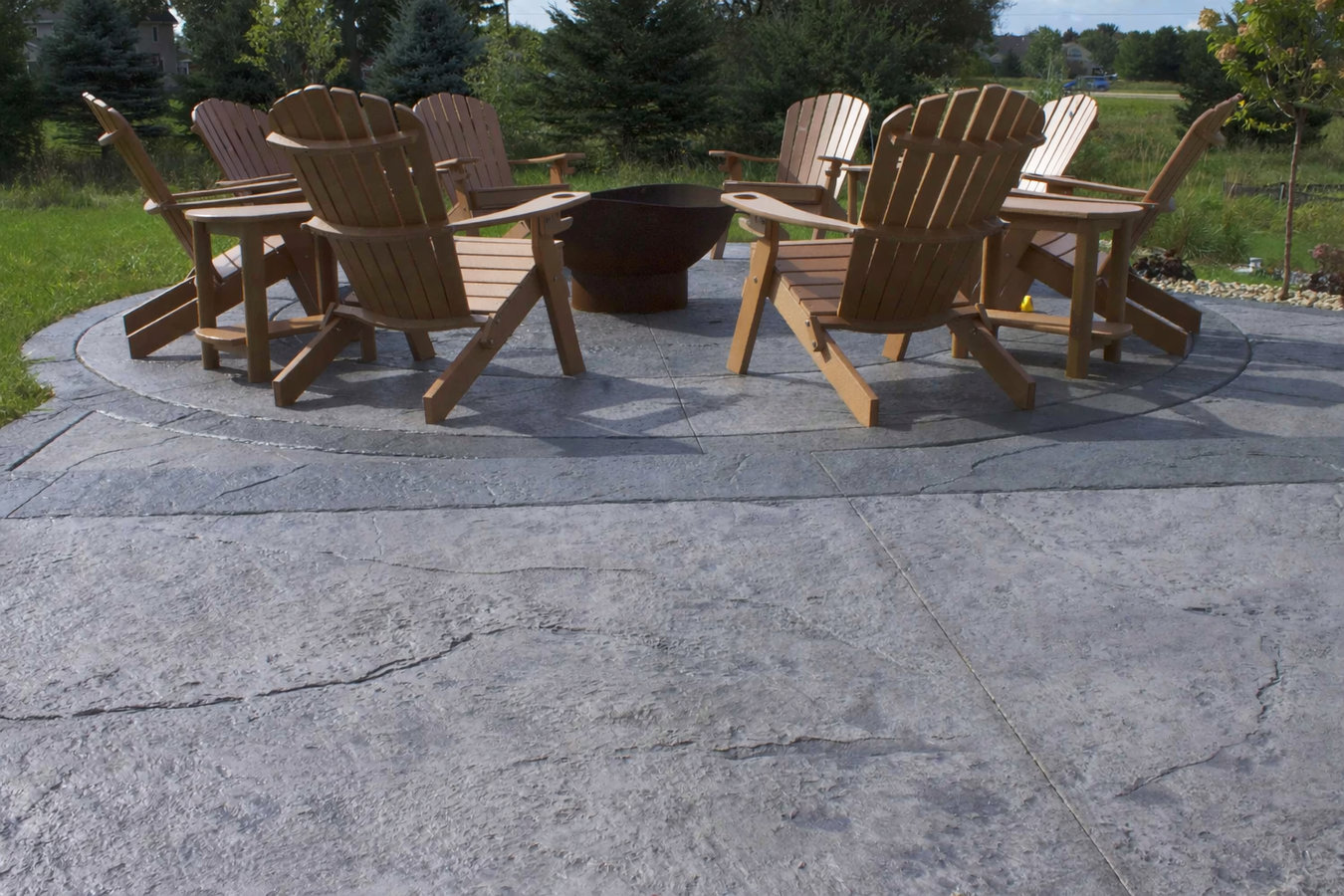
Scottsdale homeowners in HOA communities - from Old Town bungalow blocks to the custom estates in north Scottsdale - expect concrete flatwork that looks as good as it performs. Stamped concrete gives you a stone, slate, or tile appearance with the durability of a reinforced slab. See our stamped concrete services.
Scottsdale has one of the highest rates of residential pools in the country, and the desert sun bakes a standard gray pool deck surface into something uncomfortably hot by midday. We finish pool decks with textures and lighter pigments that stay walkable in 110-degree heat and resist the bleaching effect of strong UV exposure and pool chemicals.
Outdoor living is year-round in Scottsdale for most of the year, and a patio that drains poorly or shifts on sandy desert soil becomes a liability instead of an asset within a few monsoon seasons. We assess soil and drainage conditions before every pour and build patios sized and sloped for the specific lot.
Scottsdale driveways built in the 1970s through the 1990s are at or past the age where original flatwork is settling and cracking at the joints. The city's mix of sandy soil in some areas and expansive caliche in others means base preparation decisions have to match the specific ground conditions at the property.
Many Scottsdale lots - particularly hillside homes near the McDowell Sonoran Preserve and properties in the foothills of north Scottsdale - have grade changes that require retaining walls to prevent soil from washing toward the house during monsoon runoff. Concrete walls hold their shape where timber and block solutions deteriorate in the desert heat and moisture cycle.
Scottsdale's high home values and visible HOA standards make plain gray concrete a poor fit for most residential projects. Decorative options - integral color, exposed aggregate, and acid staining - let you match the character of the neighborhood while still getting the strength and longevity of a properly poured and reinforced slab.
Scottsdale covers about 185 square miles and grew in two distinct waves - the 1970s through 1990s in the southern and central areas, and then again in the 2000s in north Scottsdale. That split matters for concrete work. Homes in south Scottsdale near Old Town often have original driveways and patios that are 30 to 50 years old - well past the point where resurfacing makes sense - and the soil under those slabs tends to be sandy and poorly compacted. North Scottsdale homes in communities like DC Ranch, Grayhawk, and Troon were built on expansive caliche-heavy soils, and they sit in HOA communities with strict standards for exterior finishes and materials.
The climate is a force all its own here. Scottsdale regularly exceeds 110 degrees from June through August, and the North American Monsoon brings sudden, intense rainstorms from July through September. According to University of Arizona Cooperative Extension, the expansive desert soils common in the Phoenix metro shift significantly when they absorb monsoon rain and then dry out again - putting repeated stress on concrete slabs, patios, and driveways. Concrete poured at midday in summer heat also cures too fast on the surface, producing a weak top layer that spalls and cracks quickly. Both of these failure patterns are preventable when the job is done right from the start.
Our crew works throughout Scottsdale regularly, and we understand the local conditions that affect concrete work here. The city spans everything from the dense, older neighborhoods south of Camelback Road - where lots are small, driveways are short, and homes were built in the 1950s and 1960s - to the sprawling custom-home communities of north Scottsdale abutting the McDowell Sonoran Preserve, where lots can be an acre or more and HOA design review is a formal process. The kind of base preparation, reinforcement, and finishing approach that works well in one part of the city is not always right for the other.
Permit applications go to the City of Scottsdale Development Services department, and we file those directly on your behalf. For HOA communities, we know what documentation boards in communities like Grayhawk, Troon, and Silverleaf typically require - material samples, color swatches, and a site plan - and we assemble that package as part of the standard job process.
We also work regularly in Mesa, which borders Scottsdale to the west and has a large share of homes in a similar age range, and in Tempe, where infill construction and older flatwork replacement are both common needs.
Call or submit the online form with a description of the project and your Scottsdale address. We respond within 1 business day and arrange a free on-site visit at a time that works for you - no pressure, no commitment.
We visit the property, assess soil and drainage conditions, measure the work area, and review finish and color options with you. You receive a written itemized quote - if your project requires HOA approval, we discuss the documentation process at this visit.
We submit the permit application to City of Scottsdale Development Services and, where needed, prepare the materials package for your HOA design review board. Work is not scheduled until both are cleared in writing.
During summer months, all pours are scheduled before 7 a.m. to avoid the heat that accelerates surface curing. After the slab has cured to spec, we walk the finished job with you to confirm every detail matches the agreed scope.
We serve all of Scottsdale - from Old Town neighborhoods to north Scottsdale HOA communities near the McDowell Preserve. Free written estimates, 1-business-day response.
(480) 919-9947Scottsdale is one of the largest cities in Arizona by land area, stretching from the Salt River in the south to the Maricopa County line in the far north - a distance of about 31 miles. The southern end is the most developed, centered on Old Town Scottsdale, with its dense mix of art galleries, restaurants, and retail along Scottsdale Road. The residential character shifts dramatically as you move north - from modest 1970s ranch homes near the 101 Freeway corridor to large custom and semi-custom homes in gated communities like DC Ranch and Silverleaf, where lots are generous and HOA architectural standards are enforced closely. Scottsdale Fashion Square near the center of the city is one of the largest shopping malls in the Southwest and a well-known community landmark.
A large share of Scottsdale residents are long-term homeowners who have lived in their properties for 15 or more years - and in that time, original driveways, patios, and pool decks have had years of desert heat and monsoon cycles to work on them. The city also has a significant seasonal population: part-time residents who spend winters here and summers elsewhere. Homes that sit empty through the hottest months accumulate deferred maintenance that becomes apparent when owners return in the fall. Nearby Fountain Hills to the northeast and Chandler to the south share many of the same property characteristics and service needs.
Precision-poured interior floors for residential and commercial spaces.
Learn MoreHeavy-duty parking lots designed for high-traffic commercial use.
Learn MoreWhether you need a new stamped patio, a pool deck replacement, or a driveway that can handle the desert heat - call now or submit the form and we will respond within 1 business day.